Portfolio · October 2026

I build.

> delivery platforms

I design and ship complete digital products: mobile apps, admin panels, logistics and routing, payments, AI agents and websites. All in production, built by me directing AI coding agents. My own company, Deliservy, is the proof: right below you can use its panels as live demos, chat with its AI assistant and see its app. I can build this and much more for your business, 100% custom. I also study your business model and how it would run best, fully automated.

89/89 tests0 open findings3 agent reviews4,199 commits
delivery-engine — zsh

  
~185klines of production code written in about six and a half months, directing AI agents (211k in total)
874HTTP endpoints in the backend and the admin API
5,343automated test cases: 2,996 backend, 1,994 app, 353 admin
4,199commits; 3,637 co-authored by Claude agents

Audit of the four codebases, October 2026: the mobile app (~98k lines), the backend with its scripts (~69k), the admin service with both panels (~41k) and the website (~4k). Code lines exclude blank lines, comments, generated code, third-party libraries, documents and retired code; commits count every branch.

01
Chapter 1 of 5

Design your shirt

Your logo, your text and your drawing on the shirt: turn it, see it on a model or on you, and order the right size.

✦Concept · for custom apparel brands

Try it on: your design, on you

Online stores show your logo on a flat shirt. Here your customer sees it on a real person, or on themselves with the camera, and orders in the right size. A working example of what I can build for your brand.

1Pick your garment
2Pick a color
3Add your logo
Print on
Logo position

PNG or SVG with a transparent background works best.

Reviewed by an agent, no errors

Concept · example prices
$33.59each

✓ No minimums · ✓ No setup fees · ✓ Free shipping from $29 · ✓ Your photo stays on your device

4The model
Skin tone

The model's own skin tone. More tones coming soon.

02
Chapter 2 of 5

Try it live: what I can build for you

Two panels, an AI assistant and an app you can use, and eight things every modern operation runs on.

▶Live demos

Open it, click anything, make it yours

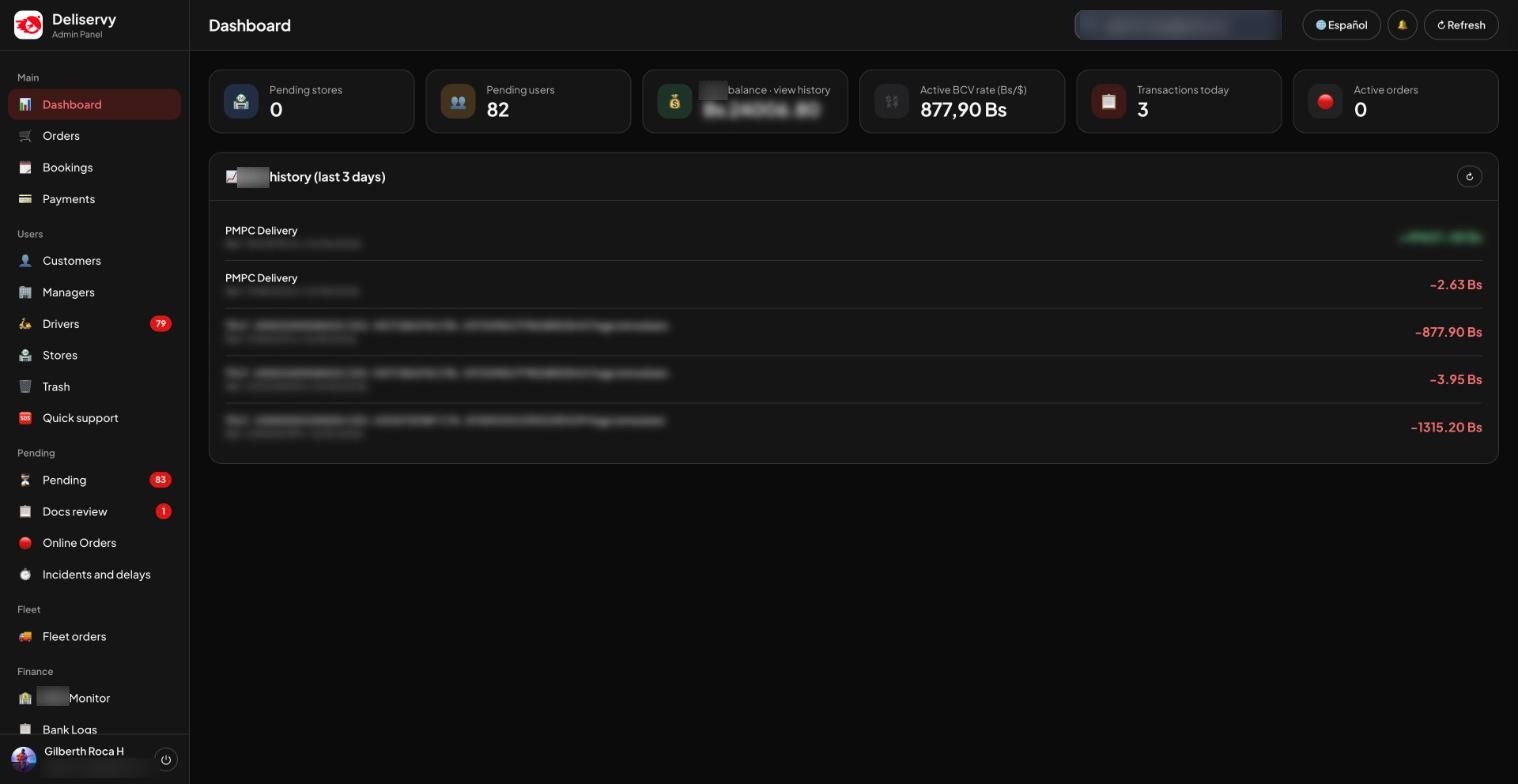
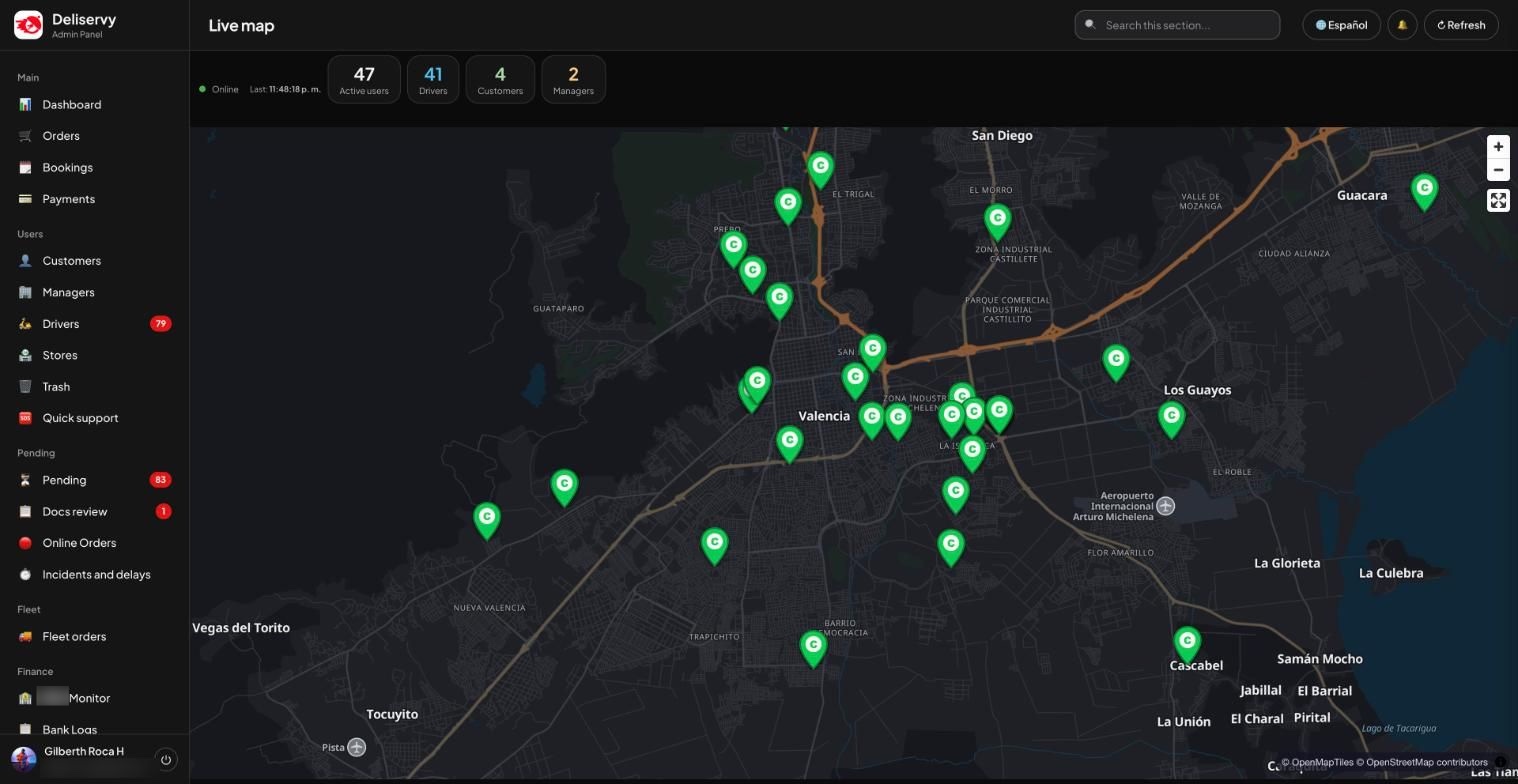
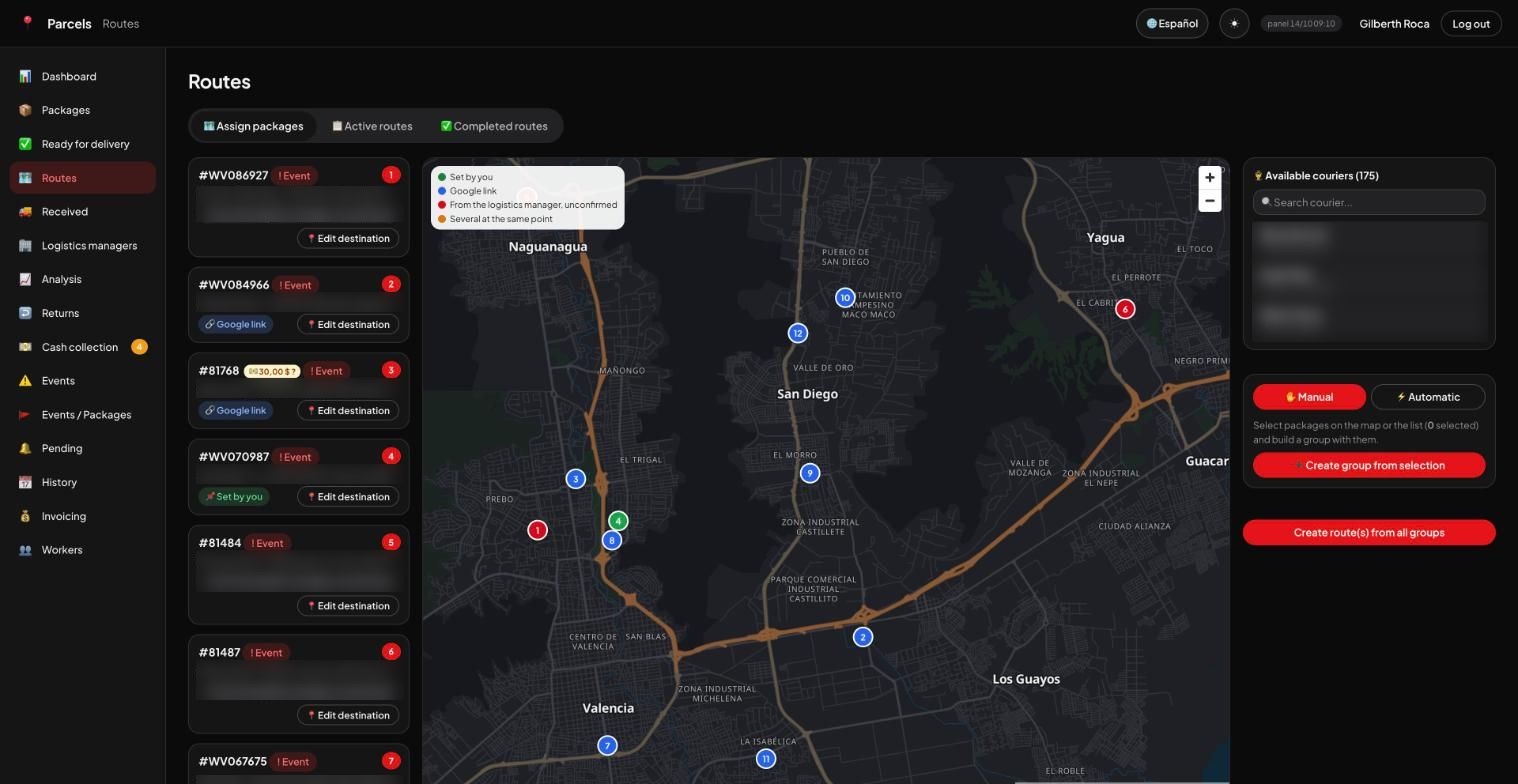
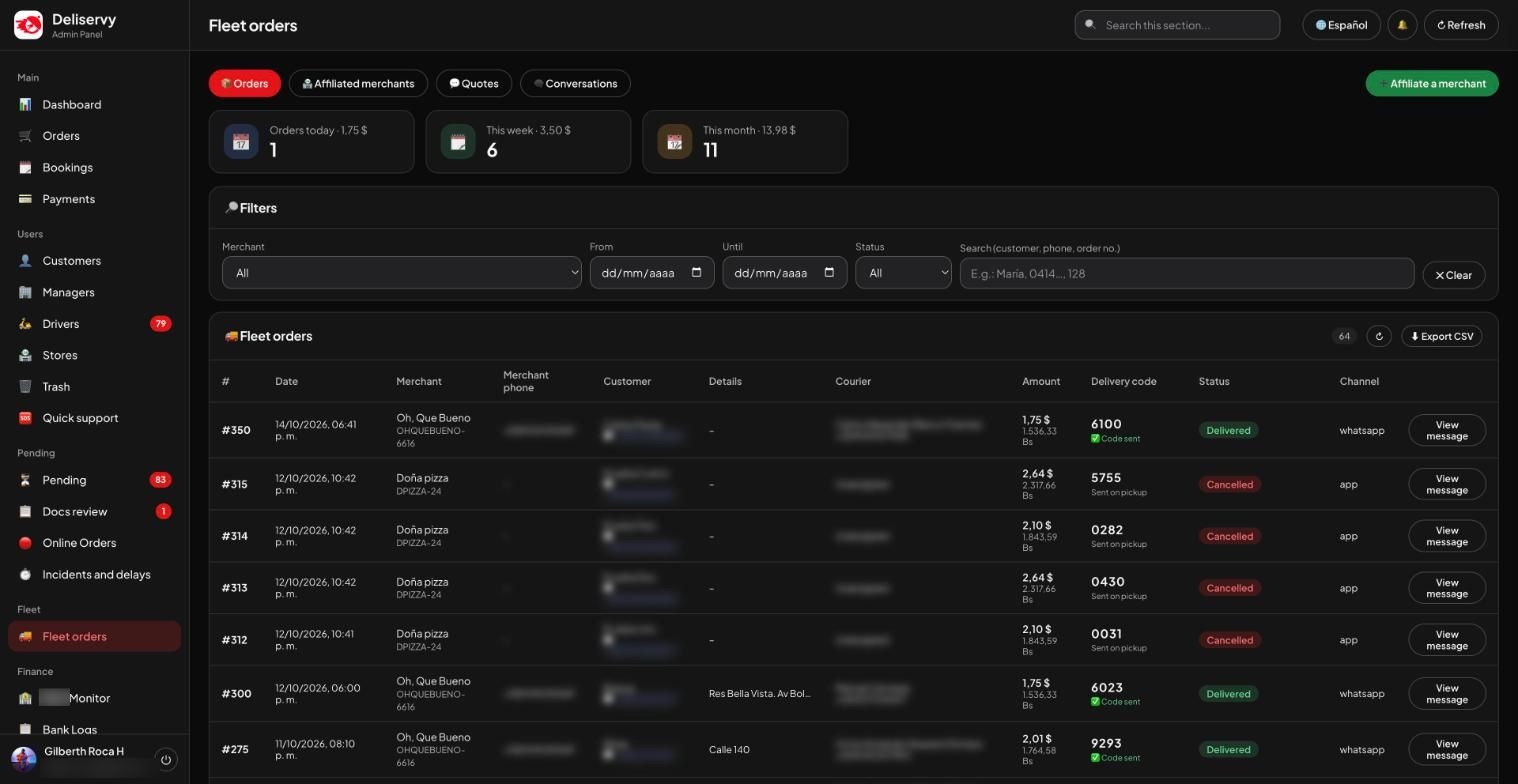
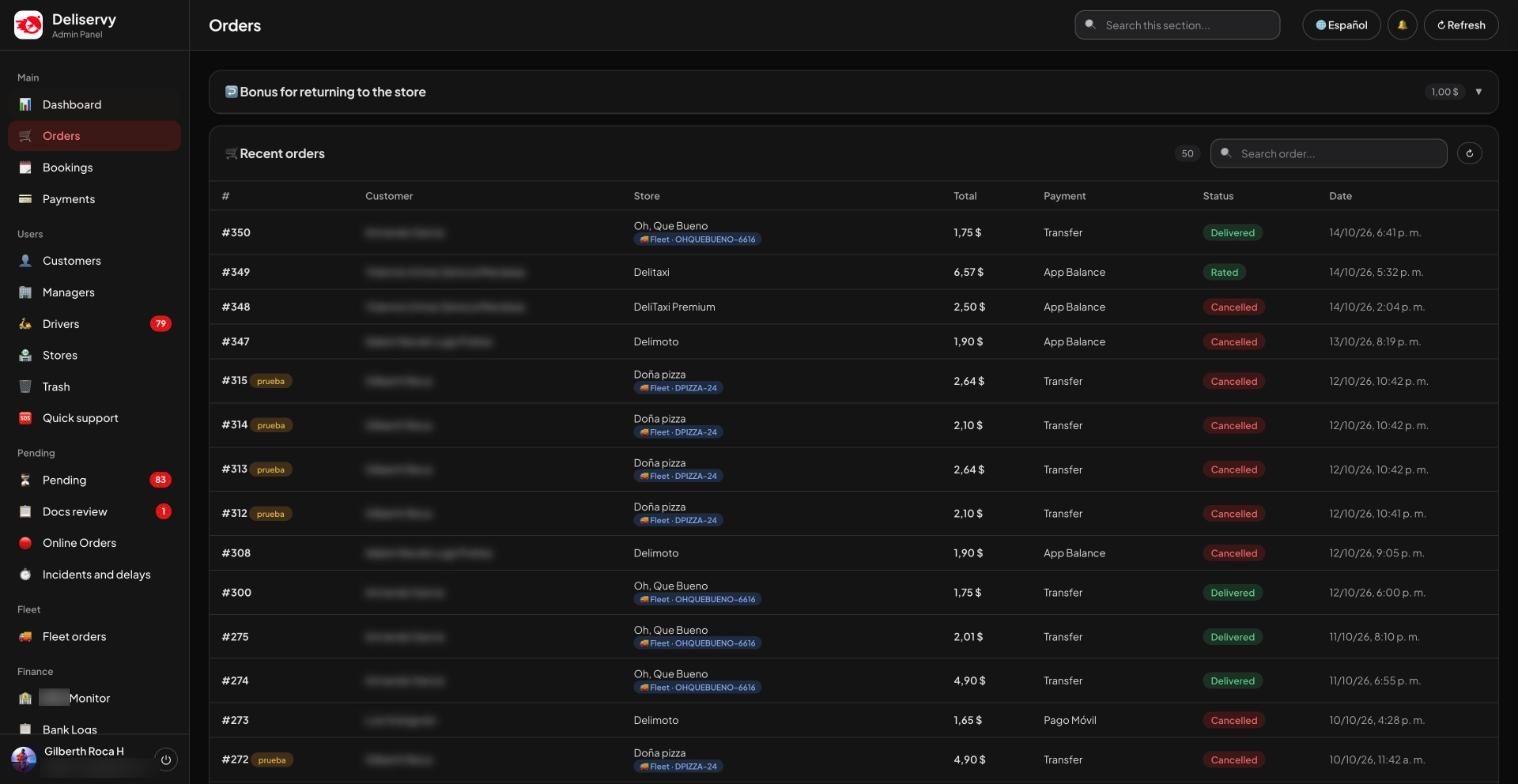
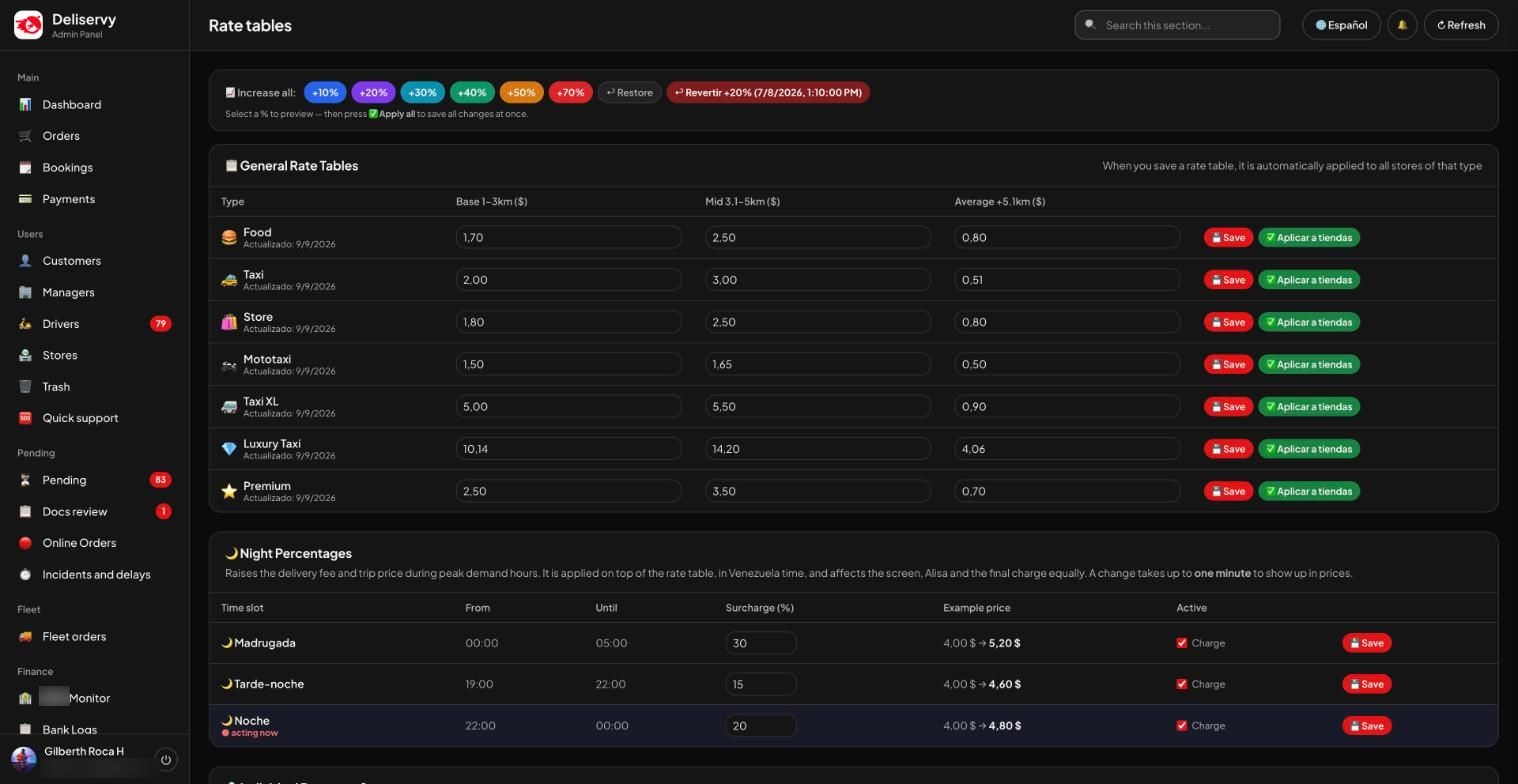
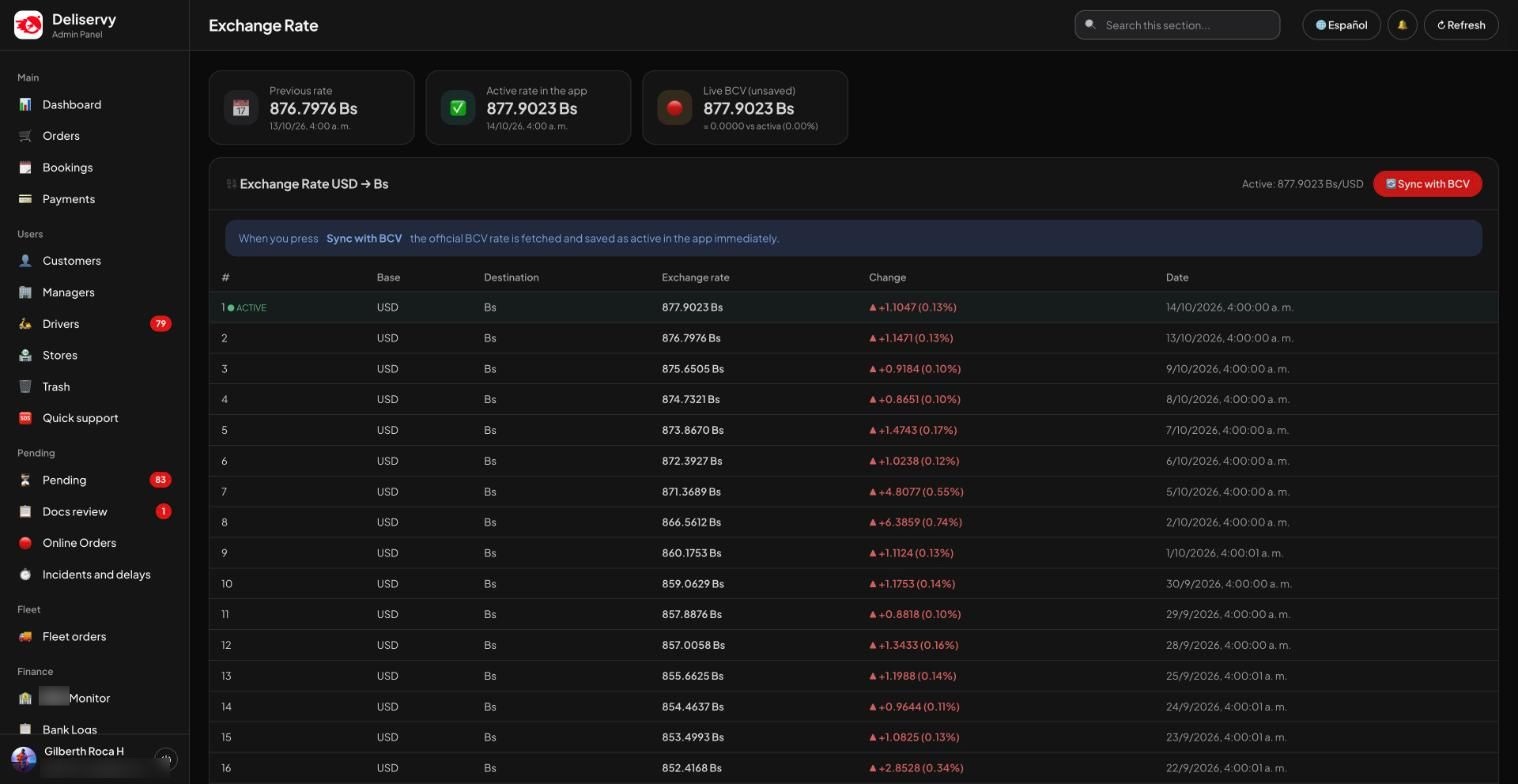
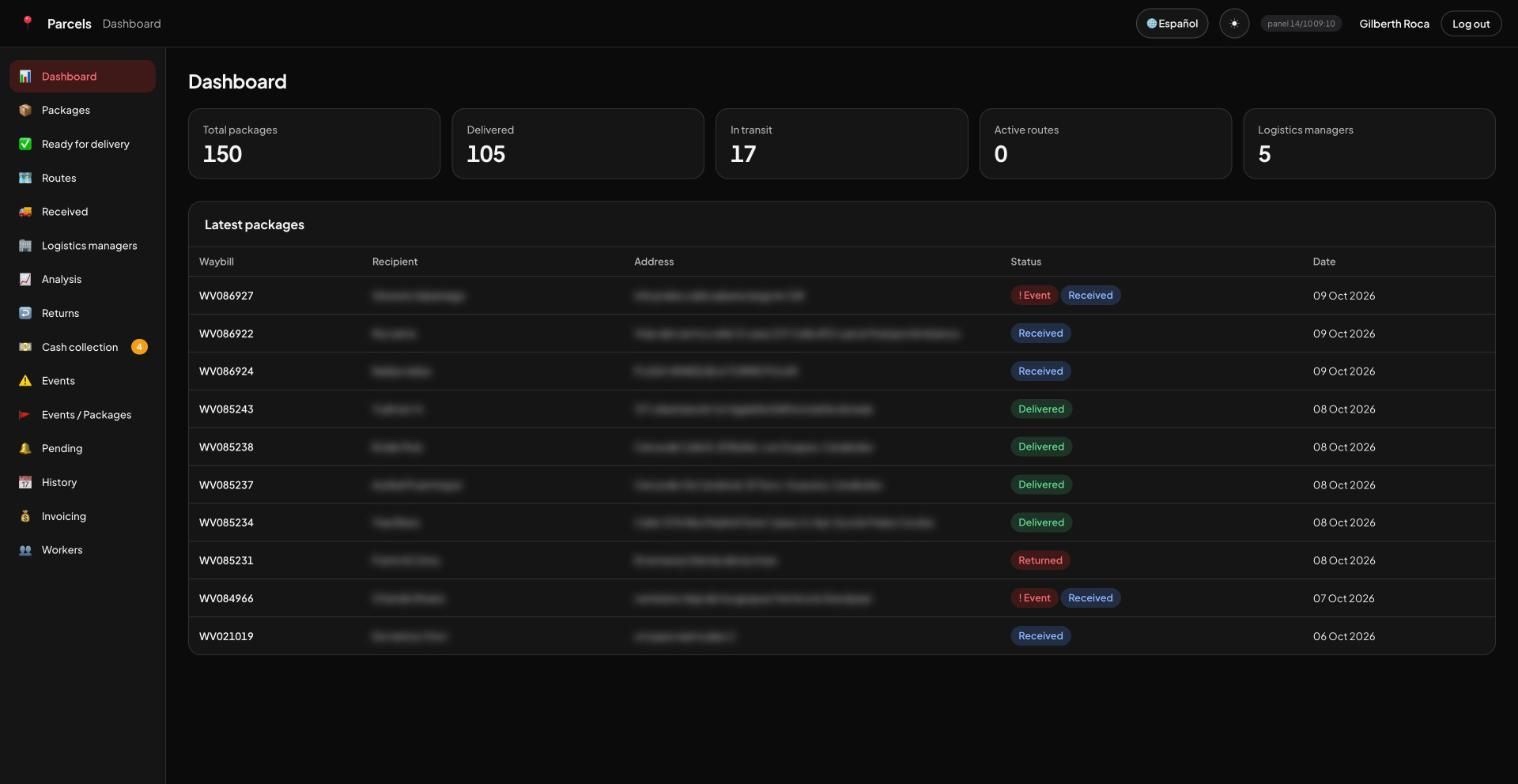
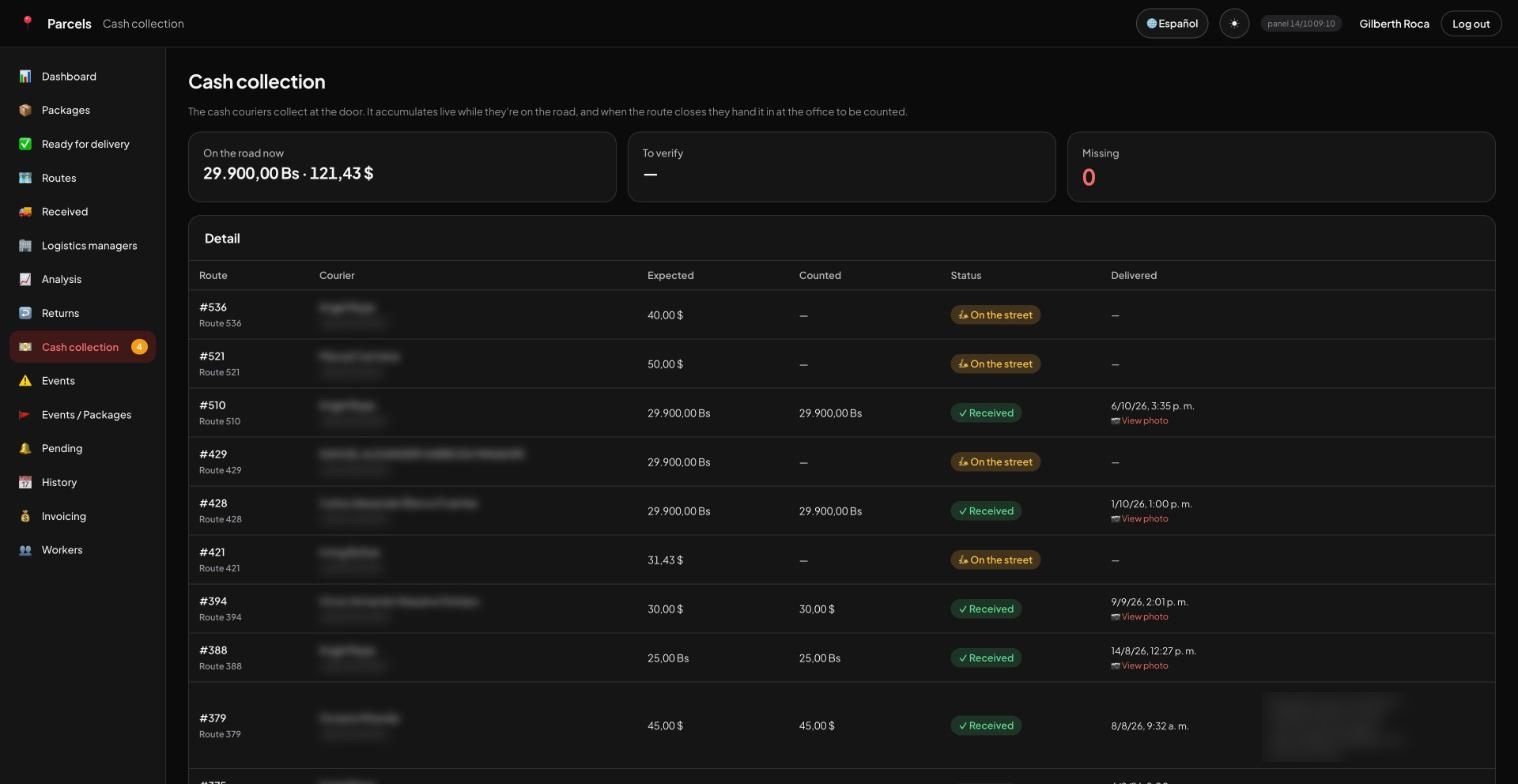
Copies of the two panels I built for Deliservy: the same menus, the same screens, and every button working, on invented data. Type your company's name and pick a color, and both panels become yours. Nothing is saved and nothing reaches a real system. Next to them: the real AI assistant and the real app.

Parcel panel · live demo38 menus in admin · 19 in parcels · try “Routes” → ▶
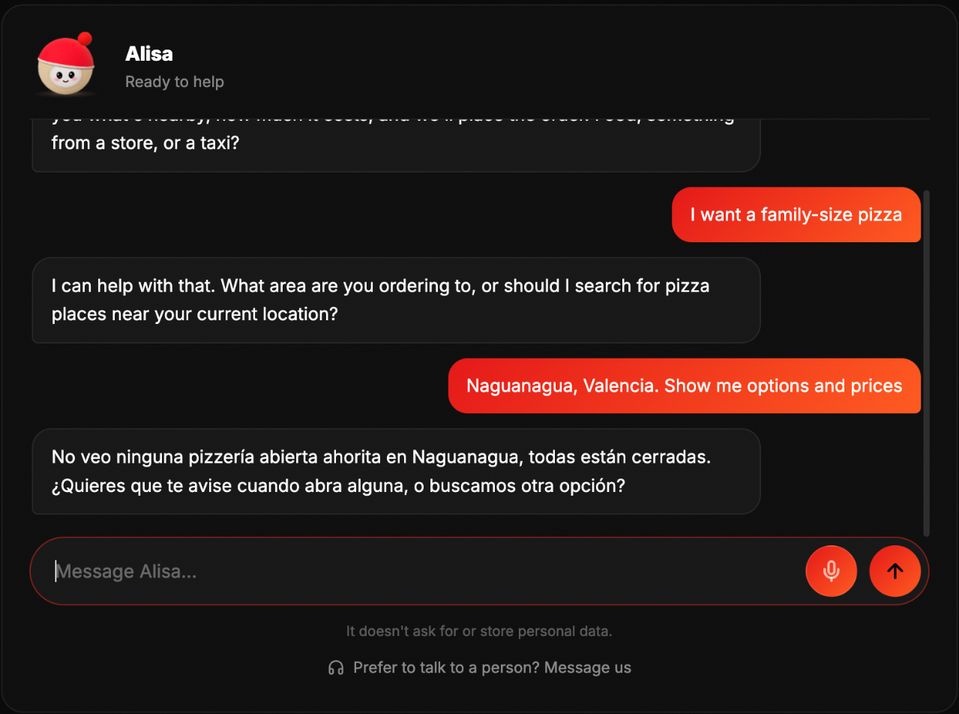
Chat with AlisaThe real assistant, live

This is the real Alisa that serves Deliservy's customers in Valencia, Venezuela. Without an account she can show stores, quote and build a cart, but she won't charge anyone.

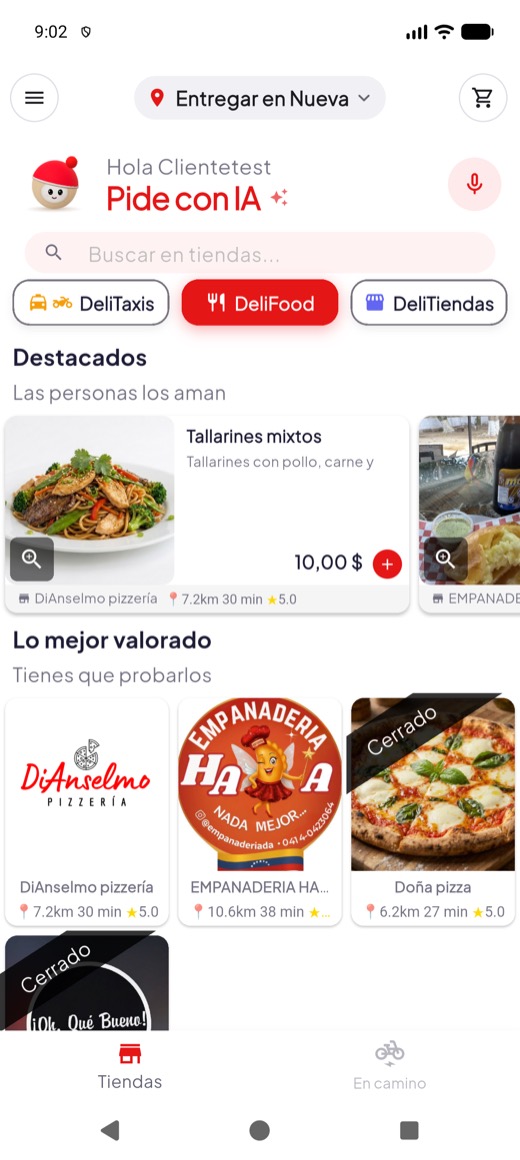
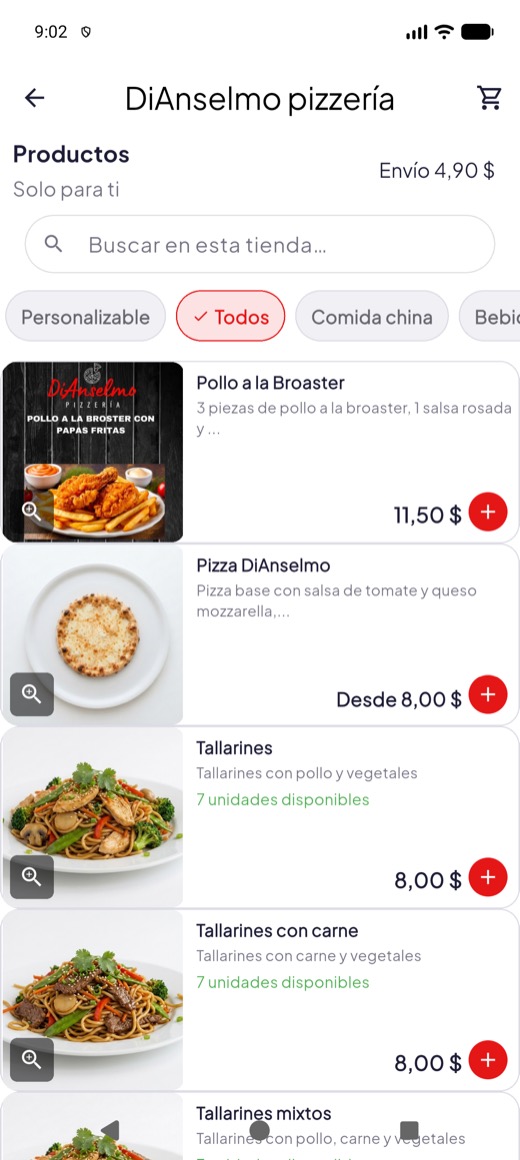
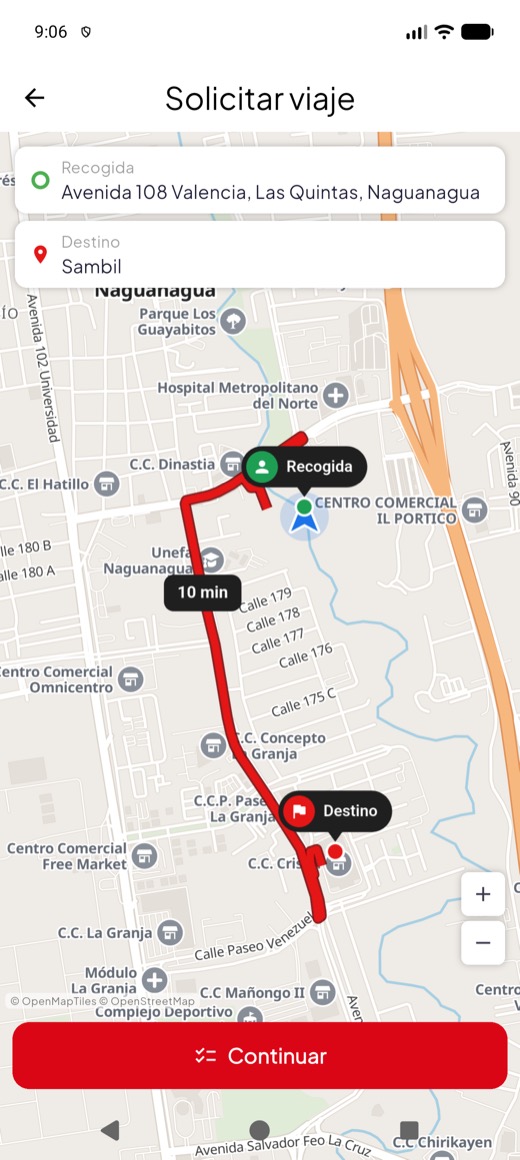
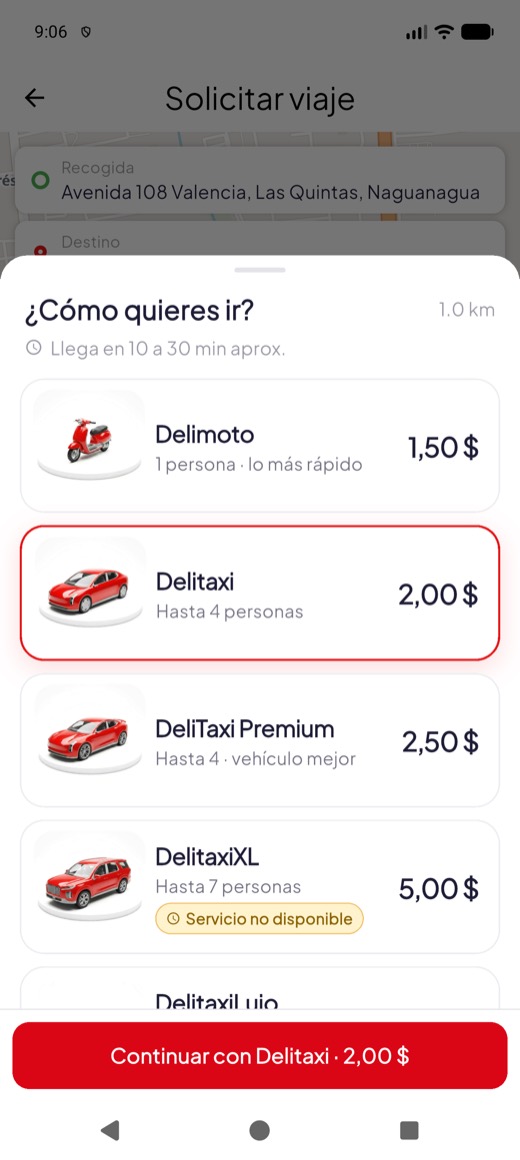
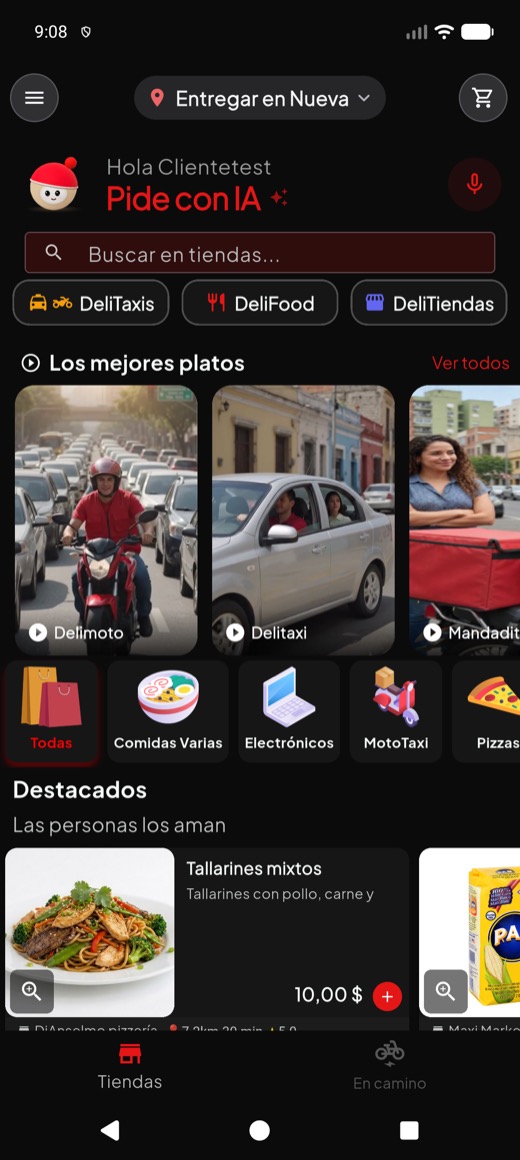
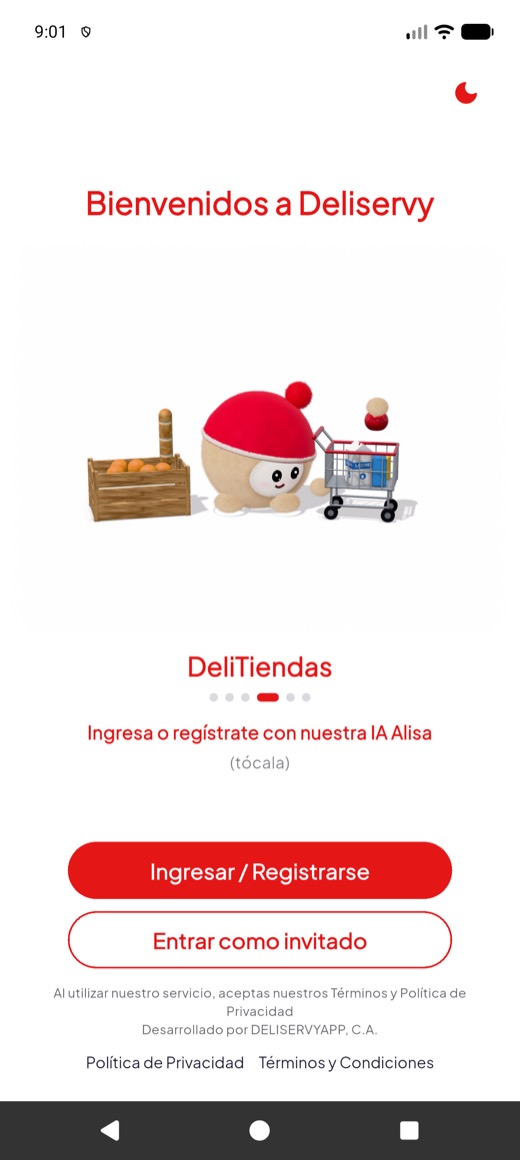
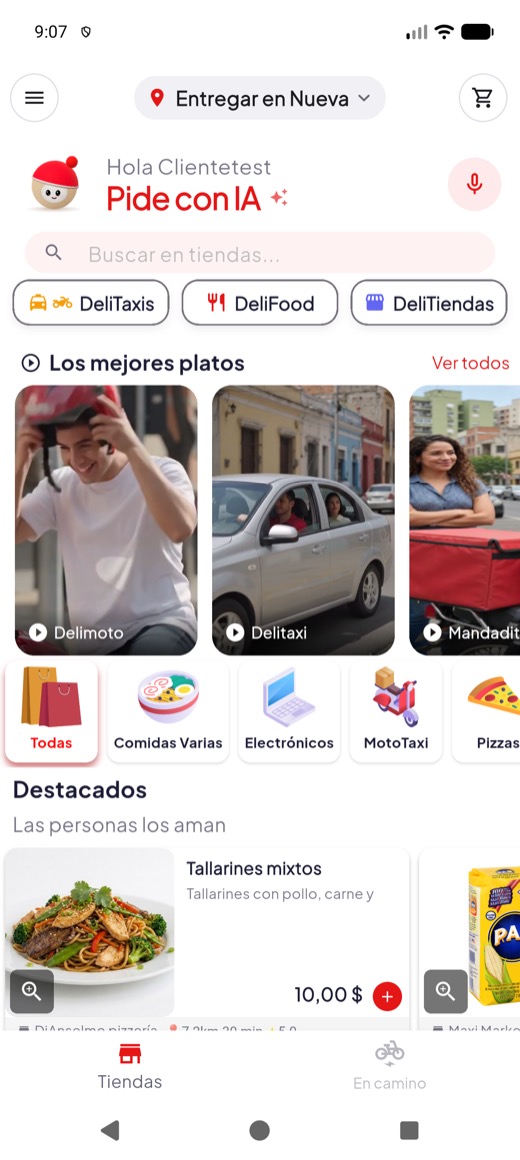
Welcome screenHome: rides, food, stores and errandsRestaurants: featured and top ratedA store's menuOrdering with the AI assistantA ride on the map, with pickup and destinationChoosing a vehicle, with pricesHome in dark mode

Real screenshots of the current version (2.8.6) of the iOS and Android app. It serves customers in Venezuela, so its interface is in Spanish.

▶ Run the real Android app ↗
◆What I can build for you

Everything a modern operation runs on, already built once

03
Chapter 3 of 5

The proof: a company I built

Deliservy runs in production today. Every screen and every number here is real.

What I've built

One company, built end to end by one person

Deliservy is my own company, running in Venezuela today: a consumer app, an AI assistant, two operations panels, a parcel service and a website. I built all of it, and it is the proof of what I can build for you.

~6 hours

of agent work for everything on this page: the live demos, the delivery engine with its tests and three rounds of review, and the Android build. Measured from the session logs, counting only active time.

I support everything I build

If something fails, I fix it. When the business changes, I adapt it. I keep improving what's there and expanding it into new services, cities and channels. Deliservy keeps improving without a break: 4,199 commits across its four codebases.

The source code of the app, the backend and the real panels stays private. The code you can see here is the delivery engine and this page itself.

⌘Inside the platform

Every part of it, one tab at a time

Consumer app & AI

Food, stores, taxis and errands in one app, with an AI that takes the order

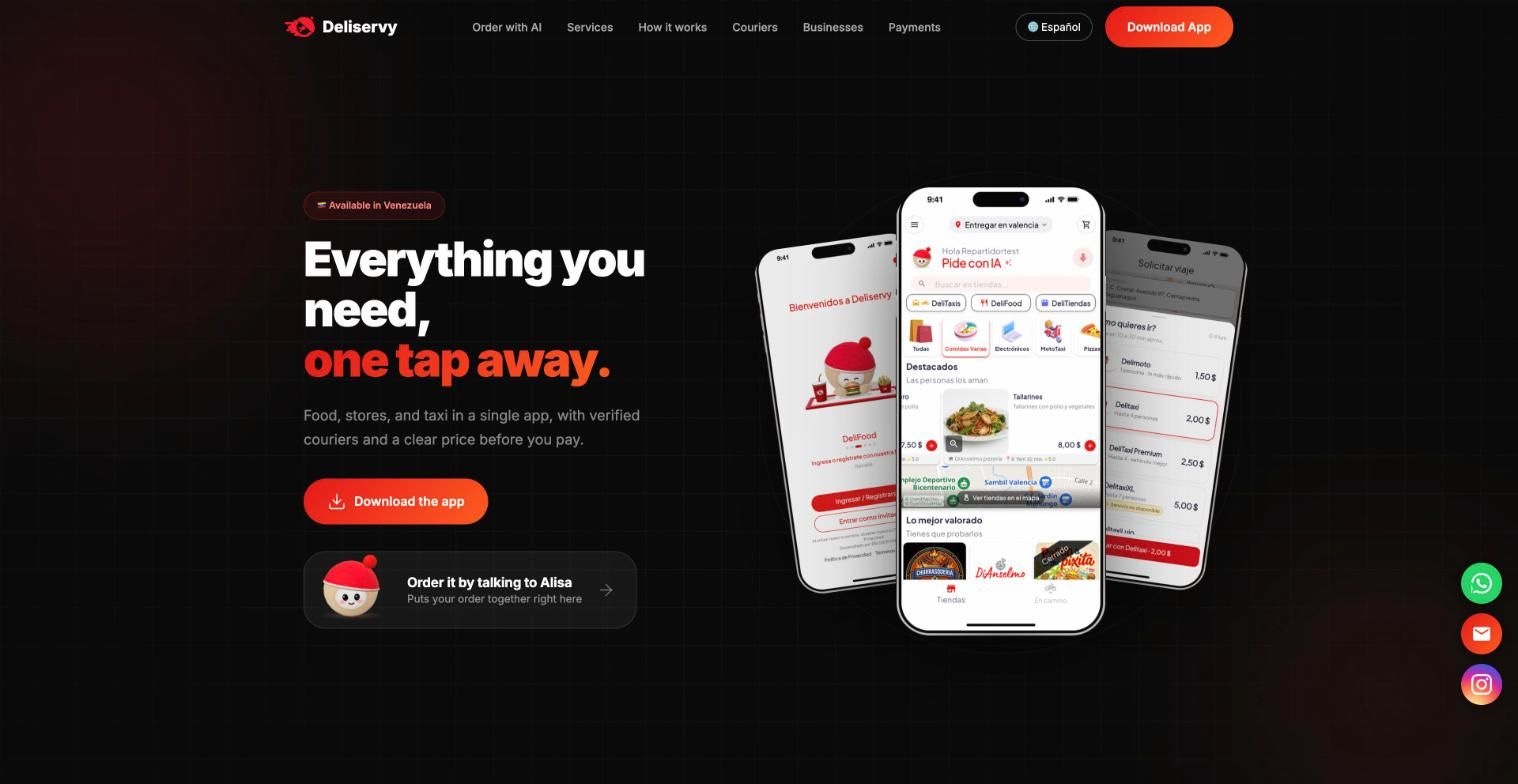
Deliservy website with the consumer app screens
deliservy.com · the consumer app (iOS and Android): DeliFood, DeliTiendas, DeliTaxis, errands, and "Order with AI".

What the app does

  • Seven service types: food, stores, moto-taxi, taxi, XL, luxury and premium rides, plus errands.
  • Scheduled orders: paid reservations released to couriers ahead of time, with the lead time based on distance.
  • Live tracking over WebSockets, with ETA updates pushed to the app.
  • Delivery PIN chosen by the customer, and a pickup PIN for taxi rides.
  • Identity: face enrolment, face login, duplicate-account detection and age check from an ID.
  • Wallet with refunds at the original exchange rate, tips, coupons, referrals and donations.

Alisa, the AI assistant

  • 38 tools inside the app: find stores, read menus, build the cart, pick address, schedule, apply coupons, choose payment, find a mobile payment, create a card payment link, order a ride, cancel, check wallet and refunds.
  • Voice ordering: live audio streamed to speech recognition, turn detection, then the same agent.
  • WhatsApp, Instagram and Messenger, including voice notes.
  • Merchant fleet over WhatsApp: a business texts a free-form order; the model splits it into name, phone, address and notes, and each field is checked against the original text so nothing is invented.
  • Public web version with no access to personal data, per-IP limits and a daily message cap.
Alisa web chat
Live, tonight: Alisa checks real store hours before answering and replies in the customer's language.
AIAlisa

An AI agent that gets better every week, because every mistake becomes a rule

Alisa takes real orders by text and voice, in the app and on WhatsApp, Instagram and Messenger. She started in May 2026 as a support chat. On 22 August she started answering on WhatsApp, Instagram and Messenger, and on 27 August she began placing real orders with tools. Most of her was built in about seven weeks of focused work, and she keeps improving.

38tools she uses: stores, menus, cart, addresses, scheduling, payment, rides, refunds
175commits that mention her (61 in Aug, 78 in Sep, 32 in Oct so far)
119automated test cases for her code, in 10 suites
62written lessons, each one born from a real mistake

How her mistakes get fixed

Watch real conversationsEvery merchant conversation is logged with Alisa's reply, and I read them. A daily 8 a.m. check also catches the silent failures, such as messages that never reach a channel.
Find the real causeOnce she named the wrong pizzeria for a pizza. The product, store and price were all real, but she wasn't told that the right store was closed. The fix was the missing data, not a bigger prompt.
Turn it into a ruleThe lesson is written down where every agent reads it: never invent stores, products or prices; never say "order placed" without an order number.
Turn it into a testEach fixed mistake becomes a scenario. Before switching her to a new model, the full behaviour batteries must pass; the last switch passed 22/22 and 26/26 rules.
Guard the factsWhen she reads a free-form order, every field she extracts (phone, name, address) is checked against the original text, so she can't make data up.

Talk to her

The chat at the top of the page is the real Alisa, connected to the live service. Ask what's open, ask for a pizza or a ride; write in English or Spanish.

Chat with Alisa ↑
04
Chapter 4 of 5

How I build

I direct AI agents and verify everything they do: the method, the cost and the evidence.

★How I build

I don't write code by hand. I direct AI agents, and I verify everything they do.

Typing code line by line is the slow part of software. My work is the part that decides whether software is right: specifying the problem, splitting it into tasks, delegating each one to an agent, reviewing every change and gating it with tests. Everything on this page, and all of Deliservy, was built that way.

The cost of writing code by hand

  • Slow. The standard cost model puts a full team at about 28 months for this much code.
  • Expensive. 21 to 37 salaried engineers, $12.0M–$39.3M before management, design and QA.
  • Tests get skipped. When every test costs a person's afternoon, coverage is the first thing cut.
  • Knowledge stays in heads. Decisions live with whoever typed the code, and leave with them.
  • One task at a time. A developer works on one thing; changing direction is costly.

What directing agents changes

  • Speed. ~185k lines across the app, backend, panels and website in about 6.5 months, with one engineer.
  • Cost. About $245k–$380k (6.5 months of a Staff/Principal engineer's pay, plus ~$1,600 of AI subscriptions) instead of a department.
  • Tests by default. 5,343 automated test cases, written alongside the features, not after.
  • Parallel work. Up to six agents on separate branches at the same time.
  • Written down. Rules, design notes and decisions live in the repository, where every agent reads them.
See the full numbers: cost, time, team size and the AI bill
Writing the same ~185k linesPeopleTimeCost
By hand, lean team (COCOMO)~21 engineers~28 months$12.0M–$21.8M
By hand, typical team (COCOMO)~37 engineers~28 months$21.6M–$39.3M
Directing AI agents (what actually happened)1 Staff/Principal engineer~6.5 months~$245k–$380k
Saved20–36 people~21 months$11.6M–$39.0M (97–99%)
CodebaseLines written with agentsTest casesBy hand, lean estimate
Mobile app (iOS and Android)~80k (98k total)1,994~$5.0M–$9.0M
Backend, bank and AI integrations, scripts~62k (69k total)2,996~$3.9M–$6.9M
Admin service, admin panel and parcel panel~40k (41k total)353~$2.4M–$4.4M
Website~2k (4k total)–~$0.2M–$0.3M

COCOMO (basic) is a model, not a quote. It is applied to the ~185k lines of production code written directing AI agents (blank lines, comments, generated code and third-party libraries excluded) and priced at the pay of a senior software engineer at a U.S. tech company ($250k–$350k a year in total compensation), plus ~30% overhead at the high end. Per-codebase figures are estimated separately and add up to slightly less than the whole. "What actually happened" is priced at the pay of a Staff to Principal engineer in the U.S. ($450k–$700k a year in total compensation: the level of someone who designs, builds and runs whole systems alone) for about six and a half months, about $244k–$379k, plus about $1,600 of AI subscriptions. The traditional teams are priced at senior pay, not at Staff/Principal pay, so the comparison favors them. AI-written code and UI markup can be wordier than hand-written code, so a line-based model may overstate the manual effort; read these as an order of magnitude.

Alisa, the AI assistant, measured the same way

By hand (rough COCOMO estimate)2–4 engineers · ~8 months · $0.2M–$0.4M
Directing agents (actual)1 Staff/Principal engineer · ~7 weeks of focused work · ~$30k–$47k

Alisa is about 10,900 lines (core, channels and voice, comments included). The estimate assumes the same code-to-comment ratio as the whole backend.

How I keep the AI bill small

  • Flat subscription for building. All the coding agents ran on one Claude Max plan at $200 a month: about $1,600 for the whole build, around 2% of what it actually cost.
  • The right model for each task. Faster models do routine work; the strongest ones are saved for hard problems and reviews.
  • Hard limits in production. The public version of Alisa has per-IP limits and a daily message cap, so a spike can't run up the bill.
  • Fewer wasted runs. Clear specs and shared rules mean agents get it right sooner, and tests catch mistakes before they cost a second attempt.
6agent sessions working in parallel at peak
13agents at once at peak: 1 session directing 12 sub-agents
186agent sessions logged since 13 Aug 2026 (61 main, 125 sub-agents)
3layers of verification: tests, reviewer agents and me

Measured from the session logs kept on my computer, which go back to 13 Aug 2026; earlier months are not counted.

1 · Machines check

The agent that writes a change runs the type checker and the test suite before it reports back. Nothing is marked done while a test fails.

2 · Agents check each other

For critical work, separate reviewer agents that didn't write the code try to break it and must reproduce every bug they report. The delivery engine on this page went through three such rounds.

3 · A human checks everything

I write the specs, read the diffs, test on real phones and in the emulator, and approve every deploy. Anything that moves money or messages a customer needs my explicit yes.

Advanced skills

Prompt engineeringAgent delegationMulti-agent orchestrationSpecs and acceptance criteriaCode review of agent outputTest design and verification gatesIndependent agent reviewsMutation and fuzz testingModel selection by taskToken and cost controlDeployment and production safetyAgent memory and shared rules

What I can do for a company

  • Cut engineering costs by moving teams from hand coding to directed agents, with the review and test gates that keep quality up.
  • Train engineers who are not yet clear on how to prompt or delegate: how to write a task an agent can't misread, and how to catch it when it does.
  • Set up the structure: shared rules, memory, branch strategy and review rounds, so agents work in parallel without breaking production.

Where this is going

My bet: within about three years, typing code will matter far less than knowing how to structure the work. That means clear specs, good delegation, strict verification and safe deployment for software, apps, servers and AI systems. That is the skill I practice every day, and I'm already working that way in production.
The cost math

What a traditional US team would need to write the same code

Estimated with basic COCOMO, a classic software cost model, applied to the ~185k lines of production code written directing AI agents across the app, backend, panels and website (blank lines, comments and generated code excluded), and priced with the US median salary for software developers.

Team sizeTimeUS cost
Traditional team, lean estimate~21 engineers~28 months$6.5M–$8.5M
Traditional team, typical estimate~37 engineers~28 months$11.7M–$15.3M
What actually happened1 engineer + AI agents~6.5 months~$76k*

Lean = COCOMO "organic" mode (575 person-months); typical = "semi-detached" mode (1,036 person-months). Low end of each cost range is salary only at $135,980/year (U.S. Bureau of Labor Statistics median for software developers, May 2025); high end adds ~30% for benefits and overhead. *One salary at the same median for about six and a half months, about $74.5k, plus about $1,600 of AI subscriptions (Claude Max at $200/month). Line-based models can overstate effort for AI-written code and UI markup; read the comparison as an order of magnitude. The model excludes design, QA staffing and management.

~86×

lower cost than the lean traditional-team estimate (salary only)

~4×

faster calendar time, with one person instead of 21–37

For a company, this is the difference between funding a department for two years and having one engineer ship the same scope in a quarter or two, with the architecture, tests and documentation in the repository.

Agent workflow

How the work actually gets done

Up to six coding agents work on the same production codebase in parallel without stepping on each other. The repository history shows how.

The loop

Define the change in plain languageBusiness rule, edge cases and what "done" means, written before any code. Design notes live in the repo (for example: mixed payments, return-to-store, label reader).
One agent, one branch, one featureEach agent gets its own feature branch (e.g. cobro-mixto, lector-etiquetas, misiones-ubicaciones), so parallel work never edits the same working copy.
Tests are the gate5,343 test cases across the codebases cover dispatch, pricing, reservations, payouts, invoicing, logistics and the AI tools. The suite runs before every deploy; a change that breaks it does not ship.
Human review of every diffGilberth reads what each agent produced, rejects wrong assumptions, and checks behavior against the live panels.
Integration branch per deployFinished branches merge into a dated deploy branch (e.g. despliegue-1-oct-tarde combined mixed payments and the label reader), then ship.

Commits by model (co-author trailers, main branch)

Claude Sonnet 4.6583
Claude Opus 5318
Claude Opus 5.5271
Claude Opus 4.850
Claude Fable 5.142
Claude Sonnet 513

Commits per month

Apr 2026310
May241
Jun76
Jul187
Aug173
Sep221
Oct (to the 14th)201

Source: git history of the backend repository. Every commit is authored by Gilberth; 1,277 of the 1,409 commits on the main branch carry a Claude co-author trailer.

Verified by agents

A delivery engine where every line was tested and reviewed

Alongside the parcel demo, this page includes a same-day delivery engine written from scratch, so you can see exactly how I verify code. It's the same process I use on Deliservy. One agent writes the code. Strict type checks and tests act as the gate. Separate AI agents, which didn't write the code, review it and try to break it. Every finding is fixed and the whole check runs again. The numbers below come from that run, not from a template.

–tests passing, none failing
–of the engine's lines run by the tests
–type errors in TypeScript strict mode
–open findings after the agent reviews

Why I can say it has no known errors

The compiler checks every type. Strict mode, unchecked index access and exact optional properties are all on, so an undefined value or a misspelled field fails the build.
Every rule has a test. Boundaries are tested on both sides: exactly 120 minutes is promised and one more is refused, the closing minute, the start and end of rush hour, overnight hours.
Tests don't depend on the machine. The suite passes with the computer set to any time zone, because opening hours and rush hour are always read in the hub's own time zone.
Reviewed by agents that didn't write it. Each reviewer had to reproduce a bug by running code before reporting it. Every confirmed finding was fixed, covered by a new test, and the full check ran again.
Real results only. The terminal at the top replays this engine's real check results, and the code viewer shows exactly the code that was tested.

The agent reviews

✓Code proof

The code is mine. Here is the proof, without showing it

The repositories are private, so instead of the code, here is what the code leaves behind: every commit, the size of each codebase, its modules, and the real output of the test suites, all read straight from the repositories.

4,199 commits across four codebases

The last 26 weeks, every branch: 3,722 commits. Each square is a day; brighter means more commits.

Backend API

  • 1,436 commits
  • 661 source files
  • 157 test files
adminapp-versionareasauthbank-accountsbankscartelchannelschatclientcommonconductores-asignadoscoupondeliverymandemorasdocsdonationemail

Mobile app

  • 2,152 commits
  • 462 source files
  • 200 test files
bloccommonmodelsnavegacionproviderscreensserviceswidgets

Admin and parcel panels

  • 561 commits
  • 74 source files
  • 27 test files
adminauthcampanasmailpaymentsupload

Website

  • 50 commits
  • 4 source files
test runs
$ backend · run every test (2026-10-16)
Test Suites: 1 skipped, 156 passed, 156 of 157 total
Tests:       19 skipped, 2977 passed, 2996 total
Time:        17.044 s

$ admin and parcel panels · run every test
Test Suites: 27 passed, 27 total
Tests:       18 skipped, 335 passed, 353 total
Time:        2.749 s

$ mobile app · test cases
1,994 test cases

How it fits together

Mobile app Website Chat channels API874 endpoints · AI agent with 38 tools Database Admin andparcel panels Banks, mapsand invoicing

The repositories are private. I walk through them live, on a call, with anyone who wants to check.

05
Chapter 5 of 5

Work with me

An agent for your whole company, and how we would start.

Proposal

One master agent for your whole company

I can set up a dedicated agent that knows a company's whole platform: catalog, stock, warehouses, orders, shipping, the code and the internal docs. It answers questions and does real work for each kind of person, only with the access that person's role allows.

Founders

Straight answers from live data, without waiting for a report.

How did same-day orders in Miami do this week compared with last week, and why?
Employees

Support, operations and warehouse teams ask in plain language and get the answer or the action.

Which hub is about to run out of black G500 in large, and what's on order?
Engineers

It knows the codebase and the rules, drafts changes on a branch with tests, and a human approves before anything ships.

Add a pickup cutoff to the Austin hub and show me the diff.
Customers

On the site, by chat or WhatsApp: order status, design help, sizes, reorders and delivery times.

Can I get 12 custom tees in Coconut Grove before 5 p.m.?

What it's built on, already running at Deliservy

  • Real tools, not just chat: Alisa uses 38 tools to search stores, build carts, schedule, take payment and check refunds.
  • Every channel: app, web, voice, WhatsApp, Instagram and Messenger, all served by the same agent.
  • It can't invent data: every field it pulls out of a message is checked against the original text.
  • Hard limits: per-user rate limits, a daily budget, and no access to personal data in the public version.

How it stays safe

  • Access by role: a customer sees only their own orders, an employee their area, a founder everything.
  • A human approves anything that matters: refunds, price changes, deploys and anything irreversible.
  • Everything is logged: each answer cites its source and each action leaves an audit trail.
  • It gets measured: evals on real questions before every change, the same way the delivery engine on this page was verified.
→For your company

What modern teams need, and where it already shows up in my work

The best engineering teams now want engineers who run several agent workstreams at once, with the human doing architecture, review and judgment. That's how Deliservy was built: every day for six months, in a live business that delivers to people's doors.

What teams are hiring forWhere it already shows up
Running 3–6 agent workstreams in parallelUp to six agents work on one production codebase at the same time. Each has its own feature branch, and finished work merges through dated deploy branches.
Agents write the code; the engineer owns architecture, review and judgment3,637 of 4,199 commits across the four codebases are co-authored by Claude. I read every diff and reject wrong assumptions before anything ships.
Shipping fast without breaking production5,343 automated test cases run before deploys. Some suites run end to end against the live parcel system.
Fast local deliveryAutomatic courier dispatch with search rings that widen over time, live GPS tracking, a delay watchdog, delivery PINs and proof of delivery. All of it is already in production for food, stores, rides and parcels.
An AI-first platformAn AI assistant with 38 tools takes orders in the app, by voice, and on WhatsApp, Instagram and Messenger. Merchant orders it parses are checked field by field so it can't invent data.
Rules and skills shared with the agentsWritten rules, design notes and a long-running memory that every agent loads before it touches the code.
How I review what agents write, and the mistakes I look for

How I review code an agent wrote

Did it solve the right problem?Or a slightly different one that looks similar.
Read the diff, not the summaryAgents often claim more than they did.
Run itThe app, the tests, the edge cases.
Check the blast radiusAnything it touched outside the scope of the task.

Failure modes I look for

  • Invented functions, fields or APIs that don't exist.
  • Saying the tests pass without running them, or weakening tests until they pass.
  • Edits outside the task that break something that worked.
  • Over-engineering.
  • Missing edge cases: errors, nulls, retries, reconnection.
  • Code that only looks safe. The most expensive failures are the confident ones.

How we would work together

1 · A working prototype, fast

We agree on the problem and I show you something you can click within days, like the demos at the top of this page.

2 · Production, with tests

Real data, real users, automated tests and agent reviews before anything ships. Your brand, your systems.

3 · Support and growth

I stay on it: fixes, improvements, new features, new cities and channels.

Tell me what you need

Gilberth Roca · founder and only engineer of Deliservy · Fort Lauderdale, FL · authorized to work in the US

Contact me →